-
 State and federal officials are gearing up to stop the advance of a parasitic fly that is less than 70 miles from the United States border with Mexico.
 -
 A team of St. Louis University researchers studied the effects heat has on the survival and reproduction of treehoppers as climate change remains a threat.
 -
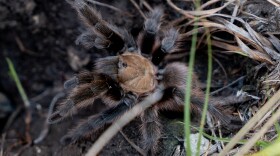 Halloween is a time to celebrate creepy, crawly animals. This year, St. Louis scientists hope to inspire appreciation for Missouri’s largest spider: the tarantula.
 -
 There are more than 40 species of fireflies in Missouri, but for the last few years people have been concerned about the populations diminishing.
 -
 Thousands of insect species use vibrations to communicate. Now, in part because of the foundational research of a Missouri biology professor, more researchers are exploring insect vibrational communication to ward against pests and understand climate change.
 -
 Monarchs are migrating through the St. Louis region now, but residents are seeing fewer of them than ever before.
 -
 A small insect carrying pathogens that can lead to corn stunt was confirmed in Missouri and Oklahoma for the first time. Experts are learning more about the insect and how the disease left its mark on corn fields.
 -
 Local scientists have some theories about why parts of the St. Louis region are swarming with cicadas while others are eerily silent.
 -
 Interested in partaking in 2024’s most unusual culinary experience? We’ve got you covered.
 -
 It's estimated that there will be 1 million to 1.5 million periodical cicadas per acre in the St. Louis region this spring.

© 2026 St. Louis Public Radio
Play Live Radio
Next Up:
0:00
0:00
Available On Air Stations


